

I hope you enjoy reading this article. If you want to delve deeper into other Bible topic – we can help, just ask.
Overview
The entire Old Testament demonstrates God’s willingness to teach, bless, help and ultimately save His creation from the bondage of sin.
It is all out of His love, goodness and mercy. They show in a powerful way God’s character from Genesis to Malachi.
His constant testimony and actions were to:
- Raise a people through whom the ultimate Savior would come.
- Bless His people individually and on a corporate level with spiritual gifts, manifesting to the world the true God.
- Reveal His ability to deliver through His mighty power from earthly enemies, as object lessons for deliverance from sin and Satan.
- Build faith and reciprocal love to Himself, in all His dealings with the power of His Word and Spirit.
The Old Testament narrates in a different way and for a different age God’s redemptive plan. Thus the everlasting covenant of the Godhead was carried in the most consistent way.
Made before the word’s creation, the plan of human salvation was the main focus of God’s relationship with humanity. The Old testament reveals that from the first promise of Deliverer till the incarnation of God’s Son in human nature.
Old Testament Scriptures’ themes with the New unfold Jehovah’s eternal purpose for His creation. So, the history of the Old Testament as recorded is of a great benefit of those who live in the following generations.
God’s character remains a constant thread, offering a unifying framework for understanding both judgment and mercy.
Its reaches is Jesus as:
- Manifested to the patriarchs
- Symbolized in the sacrificial service
- Portrayed in the moral Law
- Revealed by the prophets.
It helps you to perceive clearly the New Testament and the entire Bible. Additionally, to see the love of God through Jesus Christ of the gospel dispensation portrayed in the pages of the Old Testament Scriptures.
Table of contents
- Old Testament’s story of God’s creation
- God’s Sovereignty
- Falling into sin and rebellion
- Messiah in the Old Testament’s prophecies
- Covenanting with humanity
- Questions About the Old Testament’s Key Topics Answered
- Conclusion on the key Old Testament’s themes
Get biblical insights straight to your inbox
About the author

Bojko Belovsky – founder of God’s Love Gateway
My promise to you: Always genuine Christ-centered messages for your life growth now leading to eternity.
Old Testament’s story of God’s creation
The Divine Spirit has inspired and God’s Hand has preserved through the ages the record of creation. It is the Word of God alone that gives us an authentic account of our world’s creation.
For thus saith the Lord that created the heavens. God himself that formed the earth and made it.
He hath established it, He created it not in vain, He formed it to be inhabited. I am the Lord; And there is none else. Isaiah 45:18.
Therefore, we can know what God has revealed to humans by believing it. For example:
- In the beginning God created heaven and the earth. Genesis 1:1.
- And God saw everything that He had made, and, behold, it was very good. Genesis 1:31.
God’s creative power is as incomprehensible as His existence.
The secret things belong unto the Lord our God. But those things which are revealed belong unto us and to our children forever. Deuteronomy 29:29.
By the word of the Lord were the heavens made. And all the host of them by the breath of His mouth.
For He spoke, and it was done. He commanded, and it stood fast. Psalms 33:6, 9.
Furthermore, we have to observe and study the messages God has for us in nature. Thus we can discern the glory of the Creator in His works. For instance:
- The heavens declare the glory of God. And the firmament sheweth His handy work. Psalm 19:1.
- He telleth the number of the stars. He calleth them all by their names. Who covereth the heaven with clouds, who prepareth rain for the earth, who maketh grass to grow upon the mountains. Psalm 147:4, 8.

Human identity in the “Image of God”
And God said, Let us make man in our image, after our likeness…So God created man in His own image, in the image of God He created him.
Male and female He created them. Genesis 1:26, 27.
The Lord God formed humankind of the dust of the ground, and breathed into his nostrils the breath of life. And man became a living soul. Genesis 2:7.
Adam’s human form was perfect in all its arrangements. His biological (physical) nature (essence) was made. But it was without life. In the next step God gave him the breath of life and he became a living soul.
Thus our first parents were given spiritual and moral qualities by their Maker. And they were to represent and glorify Him as His children.
Their living souls were not only to continue in existence, but to experience a constant spiritual and moral growth. It was possible, because of what God had endowed them at their creation.
They were made with a capacity to:
- Love and be loved.
- Know and understand the goodness of God.
- Be free to choose.
Humans were the crowning act of God’s creation. He designed them to express His thought and reveal His glory (goodness and character).
Know ye that the Lord He is God. It is He that hath made us, and not we ourselves. We are His people, and the sheep of His pasture. Psalm 100:3.
Nevertheless, our broken world is not the same as it was from the beginning. Sin and Satan made it so different from the blessed time at Eden when the:
- Father and the Son had rested on Sabbath after their work of creation and God pronounced all things very good (Genesis 1:31).
- Heavens and earth were finished, and all the host of them (Genesis 2:1).
- Creator and all heavenly beings rejoiced in contemplation of the glorious scene.
- Morning stars sang together, and all the sons of God shouted for joy. Job 38:7.
God made us free moral beings, choosing to obey or disobey. The reward of everlasting life is promised to those who do God’s will through His grace.
He gave us:
- Reasoning power to understand the claims of divine law.
- Conscience to feel the guilt of transgression and the peace and joy of obedience.
Instructions to commemorate creation
God proclaimed His holy Law on Sinai. This royal Law was not changed by Christ’s life and death, but fulfill. For example:
Think not that I am come to destroy the law, or the prophets. I am not come to destroy, but to fulfill.
For verily I say unto you, Till heaven and earth pass, one jot or one tittle shall in no wise pass from the law, till all be fulfilled. Matthew 5:17, 18.
The precepts of the Decalogue are not a type. In the fourth one, God instructs of His seventh day Sabbath:
Remember the Sabbath day to keep it holy. The seventh day is the Sabbath of the Lord thy God. Exodus 20:8, 10.
This is the very day on which we are to turn aside from worldly business in order to observe it, commemorating the creation of heaven and earth.
So, just as long as they remain, this law will be binding upon those who are living upon the earth.
Furthermore, this guidance was written in the hearts of Adam and Eve before their fall. It was part of their creation in the image of God. Nevertheless, sin and Satan made the difference.
People forgot God as their Creator. Therefore, in certain time of humanity’s history, He gave them the Ten Commandments. The forth commandment points them to Him as Creator of all.
It was given after the very special deliverance from Egyptian bondage. So, this lesson of God’s omnipotent power to create and deliver is the assurance that He:
- Loves His creation with an everlasting love, and will never change. (Jeremiah 31:3, Isaiah 49:15, 16).
- Will save all from sin bondage who accept Him as their only Savior, and beside Him there’s no other. (Isaiah 43:11, 44:6, 45:21).
- Will create new heaven and earth for the redeemed as confirmed plainly in the NT, because He had done it once before. (Psalms 146:6, Jeremiah 51:15, Revelation chapter 21).
Therefore, the Book of Revelation calls at the end of time to fear, glorify and worship God for the hour of His judgment has come. He is the same God who made heaven and earth. (Revelation 14:7.)
Stay in the know of God’s love for you
Bookmark this page in your browser
God’s Sovereignty
He is the Creator of heaven and earth. (Genesis 1:1). For example:
By the word of the Lord were the heavens made. And all the host of them by the breath of His mouth.
For He spoke, and it was done. He commanded, and it stood fast. Psalms 33:6, 9.
So, He owns everything and He is the great giver of life and anything else. Furthermore, He sustains all forms of life – natural and spiritual. Our life originates from God and depends on Him.
The sovereignty of God involves fullness of blessing to all created beings. The glory of God is the well-being of humans. He identified Himself as God and Lord of humanity. (Isaiah 44:6 and 45:18).
When we seek to promote His glory we are seeking for ourselves the highest good which it is possible for us to receive.
God assures us that the thought of His majesty and sovereignty should not keep us in fear. He will do much more graciously than we think if we would ask Him.
He urges His sovereignty as a reason for His merciful abundance in supplying the demands upon Him.
For example:
Thou hast a mighty arm. Strong is thy hand, and high is thy right hand. Justice and judgment are the habitation of thy throne.
Mercy and truth shall go before thy face.
For Thou art the glory of people’s strength. And in Thy favour our horn shall be exalted. Psalm 89:13, 14, 17.
Governing in love
Love is the underlying principle of God’s government in heaven and earth. God is love and in Him there’s no variation or shadow of turning. (1 John 4:8; James 1:17).
The Lord hath appeared of old unto me, saying, Yea, I have loved thee with an everlasting love. Therefore with lovingkindness have I drawn thee. Jeremiah 31:3.
The Scriptures state plainly that the government of God knows no compromise with evil. And this He also requires from the earthly rulers. (Isaiah 9:6, 7; 2 Samuel 23:3).
God spoke His Law at Sinai not exclusively for the benefit of the ancient Hebrews. He chose them as guardians of it, held as a sacred trust for the whole world.
The precepts of the Decalogue are adapted to all. They were given for the instruction and government of humankind. The Ten Commandments cover the duty of human beings to God and to each other.
Their moral framework is based on the principle of love to God and people. For example:
- And thou shalt love the Lord thy God with all thine heart, and with all thy soul, and with all thy might. Deuteronomy 6:5; Matthew 22:37
- Thou shalt love thy neighbour as thyself: I am the Lord. Leviticus 19:18; Matthew 22:39.
So, in any dispensation, God desires and requires His children to be like Him in character. Thus they glorify their heavenly Father.
God gave the outstanding testimony of who He is (His moral character attributes). It was when Moses asked the Lord to show him His glory.
For example:
And the Lord passed by before Moses, and proclaimed:
The Lord, The Lord God, merciful and gracious, long-suffering, and abundant in goodness and truth.
Keeping mercy for thousands, forgiving iniquity and transgression and sin, and that will by no means clear the guilty. Exodus 34:6, 7.

Governing under sinful condition
The Law of the Ten Commandments is God’s way of governing human relationships to God and others in their sinful condition.
They are imbued fully with His loving nature. The ten precepts of His moral Law demonstrate that by their core principles – love to God and love to each other.
God didn’t alter nor negate His Law of love for the entire Universe after the fall at any time.
He had not changed Himself nor His Law in His dealing with the change sin made in humans.
But He gave you undeniable evidence for His love by crucifying Himself in the person of His Son.
So, it is sin that separates us from God. Thus no one can be happy and withstand the presence of the holy God.
But your iniquities have separated between you and your God. And your sins have hid His face from you, that he will not hear. Isaiah 59:2.
God can’t change His law of love. It is His nature and is eternal and constant as God is. At the same time He will not force anyone to be with Him. God gives freedom of choice to His creation.
But, there are consequences of cutting off the source of all life and development. For example:
The soul that sinneth, it shall die. The son shall not bear the iniquity of the father, neither shall the father bear the iniquity of the son. Ezekiel 18:20.
Furthermore, God is also just to Himself and to the rest of the Cosmos. And to help our broken world, He and His Divine Son devised the plan of its redemption.
It is all based on the principles of love and freedom as it was in the time of human creation. Jesus voluntarily has agreed to be the Lamb of God who takes the sin of the world. (John 1:29).
It was to be performed by the Hebrews until type met anti-type in the death of Christ.
Then all the sacrificial offerings were to cease. It is this law that Christ took out of the way, nailing it to His cross. (Colossians 2:14).
The Law of God maintains its claims upon humankind in all ages. About the Law proclaimed from Sinai, Nehemiah said:
Thou camest down also upon Mount Sinai, and spakest with them from heaven.
And gavest them right judgments, and true laws, good statutes and commandments. Nehemiah 9:13.
Let’s stay connected on social media
Bookmark this page in your browser
Falling into sin and rebellion
Sin has begun in Heaven and then expanded to earth. Lucifer, the covering cherub, desired to be first in heaven.
Additionally, to win angels’ homage as attributing to God his own desire for self-exaltation.
For example:
How art thou fallen from heaven, O Lucifer, son of the morning!
For thou hast said in thine heart, I will ascend into heaven, I will exalt my throne above the stars of God.
I will sit also upon the mount of the congregation, in the sides of the north.
I will be like the most High. Isaiah 14:12-14.
So, he deceived angels and humans, leading them to doubt God’s Word and goodness. Because of His justice, Satan caused them to look upon God as severe and unforgiving.
Our first parents had fallen short of God’s glory by believing the lies of Satan. In other words, they had distrusted God as their loving Father.
Thus they felt from their state of creation in His likeness. So, they as children began to misrepresent their Father.
Ever since, every successive human generation of Adam and Eve reflects their moral image and not God’s.
So, sin made their hearts conflict with the principles of God’s character and will, separating them with their Maker.
For example:
But your iniquities have separated between you and your God, and your sins have hid his face from you, that he will not hear. Isaiah 59:2.
The carnal mind is enmity against God: for it is not subject to the law of God, neither indeed can be. Romans 8:7.
Thus humans were severed from God – the ultimate source of life, and brought to themselves eternal death. The Bible says, The wages of sin is death. Romans 6:23.
The profound truth is that no one can avoid it without the:
- Atonement of the Son of God.
- Renewing of the heart by Divine grace.
Sacrificial system and atonement
Under the Old Testament dispensation, the typical sacrifices and offerings represented Christ. God established them to impress upon people the truth that sin causes death.
Every time the life of a sacrificial offering was taken, they were reminded of something important. If there had been no sin, there would have been no death.
God made them experience the first death of an animal to cover their nakedness. (Jenesis 3:21).
He has promised the ultimate and true sacrifice to humankind in the Garden of Eden. (Genesis 3:15). Through the ages of idolatry and apostasy, the promise of the Messiah kept the hope.
People with contrite hearts were praying that God would accept their offerings by faith in the coming Saviour.
The sacrificial system was established by God. He gave instruction early in time, even to the sons of Adam. Thus Cain and Abel knew what sacrifice they were to bring Him, and the order of acceptance.
The slain lamb that Abel brought represented the Lamb of God, who was to be slain (to be the atonement) for the sins of the world.
Cain brought as an offering the fruit of the ground, his own work as perfect offering. And God accepted only the sacrifice of Abel. (Genesis 4:2-7).
Later on Mount Moriah we see Isaac, the son of promise, as an unresistant victim, bound to the altar. (Genesis 22:9).
Thus through his experience of obedience and the grace of God, Abraham saw Christ and His day of Divine sacrifice, and was glad. (John 8:56).
Moreover, he had an illustration for it from his own experience, realizing:
- The infinite love of God for the world, demonstrated in giving His only-begotten Son to save sinners from eternal death.
- No one of the human family could atone for oneself. The Son of God alone can bear the guilt of the world.
Written ceremonial instructions
Through Moses, God made known to the ancient Hebrews the ceremonial system of sacrifices and the priesthood. They were instituted to represent the atoning death and mediatorial work of Christ.
So, they had no meaning, if not related to Him. He was their foundation. Moreover, He brought into existence the entire system.
Adam, Abel, Noah and Abraham also had knowledge of it. But the initial services appointed by God were corrupted. The Hebrews had mingled many heathen customs with their worship.
So, God gave them at Sinai definite instruction concerning the sacrificial service. The ceremonial law was given to Moses, writing it in a book.
Unfortunately, the ceremonial service took the place of genuine heart work. The people were occupied with distinctions and observances which God had not required.
Their rabbinical rules in regard to purification were numberless. Additionally, they made the life of those who tried to observe them one long struggle against ceremonial defilement.
Thus their attention was turned away from the great principles of God’s moral Law. The one that God had spoken from Sinai and written Himself on the tables of stone. Moreover, was sacredly preserved in the ark.
Flag this page for easy access
Messiah in the Old Testament’s prophecies
God has announced a deliverer right after the fall of our first parents Adam and Eve. For example:
And I will put enmity between thee (serpent) and the woman (church), and between thy seed and her seed.
He shall bruise thy head, and thou shalt bruise His heel. Genesis 3:15.
Jesus’ heels were bruised by the crucifixion nails on the cross of Calvary.
Nevertheless, in the time of the most cruel torture, His severe agony came from taking the sin of the entire world of all time. For example:
- All we like sheep have gone astray. We have turned everyone to his own way. And the Lord hath laid on him the iniquity of us all. Isaiah 53:6.
- For God hath made him to be sin for us, who knew no sin; that we might be made the righteousness of God in Him. 2 Corinthians 5:21.
Thus on Golgotha, Christ became the Lamb of God who took the sin of the world (John 1:29). His heart was burst by the separation from God the Father caused by this world’ sin.
So the Messiah typified in the ceremonial law is the very same Christ that the gospel reveals. He came and died for our sins just as the prophecies foretold that He would do.
Type met anti-type in His life and death, and the ceremonies found their fulfillment. (Luke 4:17, 18, 21).
Before His ascension, Christ explained to His disciples these prophecies. For instance:
Beginning at Moses and all the prophets, He expounded unto them in all the Scriptures the things concerning Himself. Luke 24:27.
In their ministry, apostles Peter and Paul pointed to scriptures foretelling the birth, sufferings, death, resurrection, and ascension of Christ. Thus they clearly proved the identity of Jesus as the Messiah.
All this confirmed God’s love, mercy and faithfulness towards His creation. He gave humanity another chance through His Son.
Additionally, showed that from Adam’s time it was Christ who had spoken through patriarchs and prophets.

The promise of Deliverer and Restorer
God has initiated His plan to deliver His creation from sin and Satan by pronouncing His sentence upon him in Eden. (Genesis 3:14, 15).
He introduced the main characters in the greatest conflict of Heaven and earth:
- Himself (I will put enmity) and His Divine Son (He shall bruise thy head)
- Satan (God said unto the serpent) and humanity as His subjects after the fall, and the redeemed (thy seed and her seed).
The Son of God offered to atone with His own blood for the humankind’s transgression. To Adam and Eve and all after were granted a period of probation.
Thus through faith in the power of Christ to save, they might become once more the children of God. This was the tread of human history from creation time till the incarnation of the beloved Son of God.
God has worked trough all those sanctuaries to raise a people through whom the ultimate Savior would come.
He was:
- Building their faith and love to Himself and each other in all His dealings with them. (Jeremiah 31:3).
- Demonstrating constantly the power of His Word and Spirit to deliver in real daily life (Numbers 21:5-9).
All those served as object lessons for His power to deliver from the bondage of sin.
Conversely, Satan was working to keep humanity misrepresenting Him as their Heavenly Father. As turning people aside from obedience to the will of God, Satan became the god of this world. (2 Corinthians 4:4).
So, the dominion that once was Adam’s passed to him. Nevertheless, the Son of God’s mission included not only redemption, but also the restoration of the lost dominion.
For example:
- O Tower of the flock, the stronghold of the daughter of Zion, unto Thee shall it come, even the first dominion. Micah 4:8.
- The righteous shall inherit the land, and dwell therein forever. Psalm 37:29.
From the beginning there have been some whose faith has reached out beyond the shadows of the present to the realities of the future.
So, through Enoch, Noah, Abraham, Isaac, Jacob and other patriarchs and prophets, God has preserved the revelation of His will.
God choose the ancient Hebrews to give to the world the promised Messiah. Therefore, He gave them the knowledge of the:
- Requirements of His laws (Moral and Ceremonial)
- Salvation through the atoning sacrifice of His beloved Son.
The hope of earthly blessings to all families
This hope is embodied in Abraham’s call and repeated again to his descendants.
In thee shall all families of the earth be blessed. Genesis 12:3.
Though given to Abraham, this promise has its ultimate meaning and fulfillment in Jesus. He was to be born as a man from a linage of the faithful people of God.
Thus the knowledge of God’s redemptive plan was to be preserved for the benefit of future generations.
Messengers of truth were to be raised up, calling attention to the meaning of the sacrificial ceremonies.
Moreover, to the promise of Jehovah concerning the advent of the One toward whom all the ordinances of the sacrificial system pointed. Thus the world was to be kept from universal apostasy.
Here is the example of God’s purpose to send His Son as the Redeemer of the fallen humanity kept by Mosses:
The Lord thy God will raise up unto thee a Prophet from the midst of thee, of thy brethren, like unto me.
Unto Him ye shall hearken. And I will put My words in His mouth. He shall speak unto them all that I shall command Him. Deuteronomy 18:15, 18.
Later on, Jesus backed up with His statements many of the Old Testament Messianic prophecies. For instance:
Your father Abraham rejoiced to see my day. And he saw it, and was glad. Verily, verily, I say unto you, Before Abraham was, I Am. John 8:56, 58.
And He (Jesus) came to Nazareth, where He had been brought up, and stood up for to read.
And there was delivered unto Him the book of the prophet Esaias.
And when He had opened the book, He found the place where it was written:
The Spirit of the Lord is upon Me, because He hath anointed Me to preach the gospel to the poor. He hath sent Me to:
- Heal the brokenhearted.
- Preach deliverance to the captives, and recovering of sight to the blind.
- Set at liberty them that are bruised.
- Preach the acceptable year of the Lord.
And He closed the book, and he gave it again to the minister, and sat down. And the eyes of all them that were in the synagogue were fastened on Him.
And He began to say unto them, This day is this scripture fulfilled in your ears. Luke 4:16-21.
It was to Christ that the prophetic promise was given:
I will preserve Thee, and give Thee for a covenant of the people, to establish the earth, to cause to inherit the desolate heritages. Isaiah 49:8.
Covenanting with humanity
Throughout the entire Old Testament, God’s love and faithfulness are demonstrated in His pledge to help and attend the needs of His creation.
The Father and the Son announced to our first parents the Godhead’s decision. (Genesis 3:15). They covenanted it before the world’s creation. The Son voluntarily agreed to redeem humankind if they were overcome by Satan’s deceptions. (Revelation 13:8).
So, this was not an afterwards act of the Goadhead. They were not surprised by sin on earth, but had formulated their redeeming plan beforehand.
It is crucial to understand this. Thus the Bible student can see the firmness in God’s decisions and acts for deliverance from sin. Moreover, to understand:
- God’s dealing with them for the entire dispensation from creation to the cross of Calvary.
- How the controversy between Christ and Satan played out for about 4000 years on earth.
- How God had intervened at different times, raising faithful people from whom the promised Deliverer would come.
So, God’s mission to save humanity is the covenantal agreement that defines the relationship between them. This theme isn’t a single event but a recurring theme throughout the entire Bible.
Jesus Christ was people’s Redeemer in the Old Testament as He is in the New.
So God the Father and His Divine Son were and are one in purpose and goals about humanity. Out of their love and goodness (their character), they devised and implemented the plan of human redemption. (John 3:16, 17; Romans 3:8; Galatians 2:20).
Furthermore, they had fulfilled the terms of the everlasting covenant. They were faithful to themselves, humanity and the rest of the entire Universe.
Thus God had paid the ultimate price to redeem His creation.
Old Testament’s major covenants
God has established His covenant with the patriarchs – Adam, Noah, Abraham, Moses. Through those leaders, the message of salvation through the Savior who is to come was given to individuals, tribes and nations.
Thus people from different ages had the knowledge of God’s desire to free the world from sin. This message was conveyed in various forms. God has stated His part of the covenant and the part for those who would accept it.
He has offered to all His pardon and grace on future obedience through faith in Christ. It also promised them eternal life on condition of fidelity to God’s immutable Law.
Furthermore, on Mount Moriah we see the son of promise (Isaac) as an unresistant victim, bound to the altar. (Genesis 22:9).
This was the symbol of the offering of the Son of God.
There, the covenant of blessing, the glorious Messianic promise, had been confirmed to Abraham. (Genesis 22:16-18). It was his obedience to God that unlocked the blessings. (Genesis 26:5).
Thus the covenant made with Adam and renewed to Abraham was ratified by the death of Christ.
Another covenant was formed between God and His people at Sinai, after their exodus from Egypt. The Scripture calls it the old and was then ratified by the blood of a sacrifice.
So, the Abrahamic covenant is called new. Jesus’ blood which sealed it, was shed after the blood of the old covenant.
So the major Old Testament covenants are established at different times. Additionally, on a personal and community level, according to their needs for that age and for eternity.
They interrelate, pointing towards a larger redemptive reality, understanding God’s relationship with humanity. Moreover, understanding of God’s unchanging character and consistent plan.
Questions About the Old Testament’s Key Topics Answered
These FAQs gather Old Testament’s based answers. They are meant to be clear, presenting such important matters in all aspects. Beside been factual, they carry the deeper meaning people search for.
So you can understand what the Old Testament actually teaches. Additionally, how to read it as part of the larger biblical story.
At its core, this portion of the Bible describes and explains God, humanity and their relationship. The Old Testament Scriptures are all:
- Inspired, reflecting God’s wisdom and will.
- Given out of His love to His creation, according to their specific needs at different time.
The messages of God to people in sinful and mortal state have a purpose to show them their true condition. Additionally, to guide them understand and choose a new reality, they are not accustomed to.
All that God has inspired as part of the prophecies to be fulfilled in the past has been. This builds the assurance that all that is yet to come in its order will be.
Each answer is rooted in key passages, supporting each other.
People most often ask about the following Old Testament themes:
- Human creation and fall.
- Redemption and deliverance.
- Covenants and laws.
- Prophecies, and how the OT points to Jesus.
They are not an exhaustive list, but rather leading and informative.
What is the central message of the Old Testament?
The Old Testament Scriptures explain God’s eternal purpose for His fallen creation. Central to it is His love and relentless efforts to bring back humanity to Himself.
Yea, I have loved thee with an everlasting love. Therefore with loving kindness have I drawn thee. Jeremiah 31:3.
God has promised a deliverance from the bondage of sin and Satan in the Garden of Eden right after the fall of our first parents. (Genesis 3:15).
This has set the stage and formed the foundation of God’s plan of redemption. Thus the good news of the Old Testament – the ultimate Deliverer – has been prophesied by God Himself.
He kept His promise and gave His only-begotten Son because of His love to the world. (John 3:16).
So, Jesus Christ (the Messiah) is the Gospel of the new dispensation portrayed in the Old Testament.
He said of those Scriptures:
They are they which testify of Me. John 5:39.
The Old Testament narrates a numerous instances of deliverance and redemption from earthly oppression. (Exodus 6:6; 2 Samuel 7:23; Psalm 6:23, 44:26 ).
They serve as a type and object lesson for the ultimate deliverance from sin through God’s power and faithfulness. (Psalm 130:8).
How is a person of the old dispensation saved?
Regardless of time, anyone is saved trough the merits of God’s beloved Son – the world’s Redeemer. Salvation is through faith in Jesus Christ granted by the grace of God.
It is a heavenly gift out of God’s mercy and love to all who believe in His Divine Son. For the old dispensation it was through faith in the future coming Deliverer.
This knowledge of redemption was revealed to patriarchs and kept for generations. Jesus confirmed this in His statement about Abraham. For example:
Your father Abraham rejoiced to see my day: and he saw it, and was glad. Verily, verily, I say unto you, Before Abraham was, I am. John 8:56, 58.
Thus the world’s redeemer Jesus Christ, the outshining of the Father’s glory, is the embodiment of the Old and New Testaments. He was the Savior of humanity in the beginning of the world as He is today.
So the divine institution of the entire system of Judaism was a compacted prophecy of the gospel.
It is a light thing that Thou shouldest be My servant to raise up the tribes of Jacob, and to restore the preserved of Israel.
I will also give Thee for a light to the Gentiles, that Thou mayest be My salvation unto the end of the earth. Isaiah 49:6.
It was about this Light that John the Baptist afterwards testified, proclaiming:
- I am the voice of one crying in the wilderness, Make straight the way of the Lord, as said the prophet Esaias. John 1:23.
- Behold the Lamb of God, which taketh away the sin of the world. John 1:29.
What are the Messianic Old Testament prophecies?
They are given by inspired writers throughout the Old Testament’s dispensation. It began with the promise to Adam about the coming of the Redeemer. (Genesis 3:15).
To Abraham was given the promise that of his line the world’s Savior would come. (Genesis 22:18; Galatians 3:16).
Moses prophesied that God will raise up a Prophet like him, and unto Him people should hearken. (Deuteronomy 18:15, 18).
Additionally, the Messiah was to be of the royal line according to the OT prophecies. (Genesis 49:10; Isaiah 11:1, 55:3-5; Jeremiah 23:5, 6; 33:17, 18).
The redemptive work of the Anointed One was outlined in the Old Testament Scriptures. (Isaiah 11:2, 3; 61:1-3; 42:1-4).
Christ had foretold through Isiah, Micah and the psalmist the treatment He would receive from people. (Micah 5:1; Isaiah 50:6; Psalm 22:6-8, 17, 18; 69:8, 9, 20).
Furthermore, His suffering and death for the sin of our broken world were also foretold. ( Isaiah 53:1-10).
So, the Messiah was to give His life as an offering for sin. And the Lamb of God has poured out His soul unto death, bare the sin of many, and made intercession for the transgressors.
After His resurrection, Jesus gave to His disciples a full and clear explanation of the Old Testament Scriptures about His identity.
Christ began with the first book written by Moses. He went through the inspired proof of the prophets about:
- His life and saving mission.
- Suffering, death, and resurrection.
- The fulfillment of their prophecies by all that occurred to Him. (Luke 24:27, 32).
He underlined the importance of those prophecies:
If they hear not Moses and the prophets, neither will they be persuaded though one rose from the dead. Luke 16:31.
What are the major covenants of the Old Testament?
God has made known to faithful patriarchs His plan to give a second chance to humanity. The message of salvation through the Savior who is to come was given to individuals, tribes and nations.
In Eden, God promised to Adam that the seed of the woman would bruise the serpent’s head. (Genesis 3:16).
God clearly stated His part of the covenant and also for those who would accept it. A clear distinction from the world and holiness was a condition for His people.
Later on God chose Abraham, of whom He said:
Abraham obeyed My voice, and kept My charge, My commandments, My statutes, and My laws. Genesis 26:5.
Thus the covenant of blessing, the glorious Messianic promise, had been confirmed to Abraham. (Genesis 22:16-18). It was his obedience to God that unlocked the blessings.
The covenant made with Adam and renewed to Abraham was ratified by the death of Christ. For that reason it was called “new”.
Through Mosses at Sinai, God formed another covenant with His people. It was after their miraculous exodus from Egypt. He gave them His moral Law (The Ten commandments) and ceremonial instructions.
People’s condition required them to learn the true:
- Character of their God and Deliverer – His love, goodness and mercy, righteousness and justice.
- Relationship to God and to each other, imitating His love.
The Scripture calls it the “old” covenant and was then ratified by the blood of a sacrifice, pointing to Jesus.
How does the Old Testament relate to the New Testament?
Old and New Testaments shed a true light on each other. Eider of them is a revelation of the glory of God in Christ. (Isaiah 40:5; 60:9; John 12:28).
In the Old Testament He was:
- Manifested to the patriarchs.
- Symbolized in the sacrificial service.
- Revealed by the prophets.
In the New Testament Christ is seen and understood in His:
- True representation of the Father.
- Life, atoning death, resurrection and Priestly ministry.
- Manifestation by the Holy Spirit in the believers lives.
So, the whole Bible tells of Christ.
Disciples and apostles accepted Jesus upon the testimony of prophets over a period of centuries. And it was Christ that spoke to His people through the prophets. (Revelation 19:10; 1 Peter 1:10, 11).
So, they accepted Him as the Messiah, fulfilling the Old Testament prophecies. (Isaiah chapters 7, 53, 61; Micah chapter 5).
The Christian world has a complete evidence through both the Old and the New Testament. In the one, pointing to a Savior to come. And in the other, fulfilling the prophecies’ condition.
So, Christ has spoken to people in both testaments. He is speaking to us still by His Spirit and His providence.
Who wrote the Old Testament’s Scriptures?
God gave the first promise of redemption as spoken in Eden. Since then, everyone through whom His Spirit has worked has presented this theme with new and unfolding truth.
It has undergone development and expansion in every age. They have carried a message of God to the people of the current generation. Alternatively, many would have a future application.
For instance:
- So I prophesied as I was commanded. Ezekiel 37:7.
- For the prophecy came not in old time by the will of man. But holy men of God spoke as they were moved by the Holy Ghost. 2 Peter 1:21.
So, the old truths are all essential. The new truth is not independent of the old.
God’s Word is His revelation to humanity. It is His will expressed by His inspired messengers throughout the ages.
All Old Testament writers are worth to mentioned. Some prominent figures are Mosses, Isaiah, Jeremiah, Ezekiel, Daniel. They wrote extensively for their time as well as for the future, even the time of the end.
For example:
- For of a truth the Lord hath sent me unto you to speak all these words in your ears. Jeremiah 26:15.
The unifying theme of Scriptures is Jesus Christ – the Divine Son of God. He is the living Word who became flesh. As fully human, He lived according to His Word.
The Bible has a deeper meaning, which His Spirit only can reveal to you. When you study the Scriptures, the Holy Spirit speaks to your mind and impresses the truth upon your heart.
For example:
- Not by might, nor by power, but by My Spirit, saith the Lord of hosts. Zechariah 4:6.
- The secret of the Lord is with them that fear Him. And He will show them His covenant. Psalm 25:14.
How relevant is the Old Testament at the modern Christian era of today (2026)?
The Word of God is an everlasting truth as God Himself. God’s truth is the same in all ages. It is differently developed to meet the needs of people in various periods.
God’s redemptive plan is the the key theme of the Old as well as of the New Testament.
The embodiment of the eternal Word is God’s Divine Son – Jesus Christ. He enjoined His followers to teach the words He spoke in the Old and New Testaments.
They are both sacred, for they both contain the words of Christ. All communication from heaven to earth since Adam’s fall has come through Him.
Jesus had imparted a knowledge of God to patriarchs, prophets, and apostles. The revelations of the Old Testament were sure unfolding of the Gospel.
Christ stated that the truths of the Old Testament are as valuable as those of the New. So, one is not complete without the other. He was humanity’s redeemer in the beginning of the world as He is today.
Fulfillment of the prophecies of Christ first advent as the Messiah are the assurance of the blessed hope of His second coming as King of kings and Lord of lords.
The Old Testament, the sure word of prophecy, is the only key to unlock the New Testament Scriptures. Moreover to show that Jesus Christ revealed in the gospel is the Son of God, the long-expected Deliverer.
Conclusion on the key Old Testament’s themes
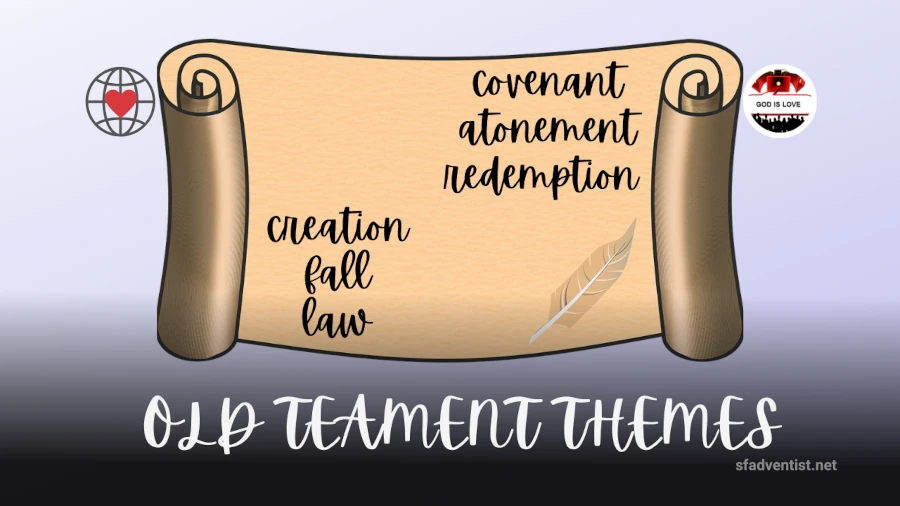
The key themes that define the theological framework of the Old Testament are:
- God’s creation and His sovereignty.
- Human sin, atonement and the hope of Messiah and redemption.
- God’s faithfulness and covenants with humanity.
The Old Testament gives a cohesive understanding of God’s unchanging character and consistent plan for His creation. His love and goodness are constant despite the human failings.
It is so with His enduring promise of restoration, building towards the Messianic hope. Additionally, it establishes Jesus’ identity as the Messiah foretold in prophecies, and reveals the nature of His mission to the world.
The Old Testament – the sure word of prophecy – is the key that unlocks the New Testament Scriptures. They are inseparable, for both are the teachings of Christ.
His life and ministry was a fulfillment of the Law and the Prophets. The Old Testament was all the Scripture then in existence. It showed that Jesus Christ revealed in the gospel is the Son of God, the long-expected Messiah.
The Old Testament student can see how each element relates to the next. Also that these themes constitute the heart of the OT message.
More about this article
Download and listen
Download FAQs about OT core themes separately
References:
- AA221; DA 21; ST, Aug, 1901; PK 363, 681-689; – The Ellen G. White Estate
- https://www.biblegateway.com/blog/2013/11/eight-questions-to-ask-when-you-read-the-old-testament/
Where to go from here
- How To Study The Bible? – Apply these principles for clear spiritual discernment.
- Read Genesis 1 in KJV Bible – Full chapter study following this article references.
- Know God Category – Explore God’s pursuing effort of bringing back His people from literal and spiritual bondage.
- God’s Love Content Hub – All Christ-centered teaching in one place.
Want weekly encouragement straight to your inbox?
Related resources to help you grow


Continue your journey with these


Choose category
- Trust God: Lean on His Promises in Real Life
- Grow in Jesus: Deepen Your Daily Walk with Him
- End Times Bible Teaching: Living with Hope in the Last Days
Choose tag
Share your thoughts and experiences in the comments section.
- What resonated with you most in this article, and why?
- Is your faith in God growing? Does your trust Him more after you see the Old Testament as a foundation for the NT?
- Reach out if you need more information on this topic.
Thanks for stopping by.
Come again in a week time for the FAQs update.
The love of God to you is the most wonderful truth He has revealed in His Word. Carry on studying.
Leave a Reply